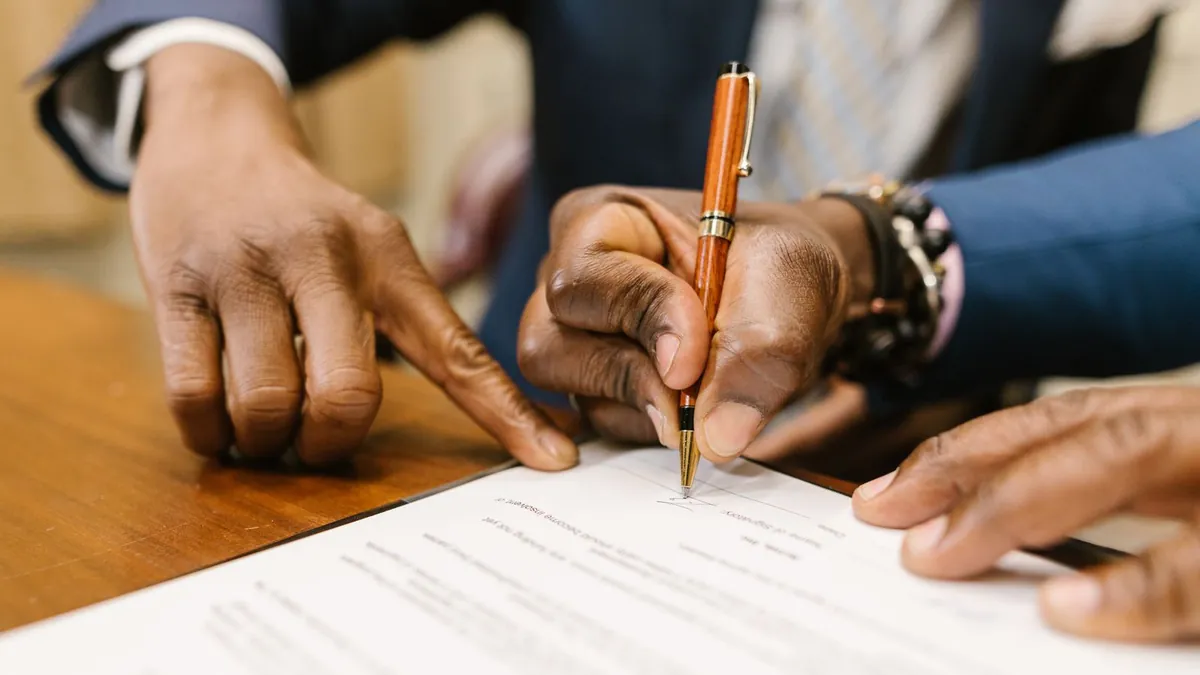
A family member needs bail, and the agent asks you to cosign. As a bail bond cosigner in Pomona, you would sign an indemnity agreement, a contract with money at stake.
This page explains what you promise and how that promise ends. It gives general information and no legal advice.
Quick answer: A California bail bond cosigner, also called an indemnitor, promises to repay the surety if the defendant misses court and the court forfeits the bond, up to the full bail plus costs. The promise ends when the court exonerates the bond, and the agent then returns your collateral unless an unpaid premium balance remains.
What are a cosigner's responsibilities on a California bail bond?
The surety is the insurer behind the bond. An indemnitor signs a contract guaranteeing the surety the full bail amount if the defendant fails to appear. As indemnitor, you agree to repay the surety if it pays.
At signing, the bail bond cost is the premium: $2,000 on a $20,000 bond at 10%. The full $20,000 is at risk if a forfeiture stands when the 180-day window closes, and the agent may add expenses allowed under 10 CCR 2081.
Ask for the numbered statement California requires (court date, time and place, premium and any unpaid balance; 10 CCR 2083) and your own copy of the surety bond agreement.
Which kind of cosigner are you?
Families say "cosigner" for three jobs, and each job follows its own California rule. A cash depositor pays the bail amount to the court clerk in place of buying a bond (PC 1295). An indemnitor signs with the surety. A payment-plan cosigner guarantees a premium balance owed to the agent.
| Role | What is at stake |
|---|---|
| Cash depositor (not the defendant) | The cash, returned in full after judgment if each court date is kept (PC 1297) |
| Indemnitor | Repaying what the surety pays, plus allowed costs |
| Payment-plan cosigner | An unpaid premium balance (Civil Code 1799.91 notice) |
If someone other than the defendant deposits the cash, the clerk returns it after judgment, within 10 days of the claim with the receipt, provided the defendant made each court date. Cash bail and bail vs bond compare the options.
What happens if the defendant misses court?
The court declares a bond forfeited in open court if the defendant misses a required date without a sufficient excuse (PC 1305). The clerk mails notice to the surety or cash depositor and copies the bail agent, but the statute does not name the indemnitor, so give the agent your number.
The 180 days run from the date the clerk mails that notice on a bond over $400, plus 5 days for the mailing, or from the forfeiture date when the bond needs no notice (PC 1305). If the defendant returns to court before that window closes, on their own or after a surrender or arrest, the court ends the forfeiture and exonerates the bond, releasing the surety and any cash depositor. The surety, agent or a cash depositor can move for a good-cause extension (PC 1305.4). Otherwise the surety faces a summary judgment for the bond plus costs (PC 1306), and your indemnity agreement can let the surety look to you.
| Clock | What happens |
|---|---|
| Missed court date | Court declares the forfeiture |
| Within 30 days | Clerk mails notice on a bond over $400 |
| 180 days from the mailing date, plus 5 | Window to bring the defendant in |
| After the window | Judgment against the surety, enforceable for 2 years (PC 1306) |
What happens to collateral, and when does it come back?
Collateral is money or property you pledge to the agent as security. The agent holds it in trust, apart from its own funds until any forfeiture (10 CCR 2088).
Under 10 CCR 2088.2, the agent returns it to whoever deposited it once the agent learns the obligation has ended, or at once when an order ends liability on the bond.
After exoneration and a demand, the agent can levy on non-cash collateral that secures an unpaid premium (10 CCR 2088.2). For real property, the agent or surety must deliver a reconveyance once the obligation ends (10 CCR 2088.3). After a forfeiture, the agent returns collateral above the forfeited bail at once, minus any unpaid premium claim (10 CCR 2089).
Can a cosigner back out after the bond is posted?
The statutes give an indemnitor no right to surrender the defendant or exit alone. PC 1300 and 1301 name only the surety, through its agent, and a person who deposited money. They can surrender the defendant before a forfeiture (PC 1300) and arrest the defendant until the court discharges the bail (PC 1301). Your exit terms sit in your indemnity agreement, so read it and ask the agent.
You can ask the agent to surrender the defendant. Before a court date, an agent that surrenders the defendant must return the premium under 10 CCR 2090. It may keep only the limited expenses that 10 CCR 2081(c) and (d) allow, and only when it proves a substantial rise in risk. A surrender at a guarantor's request is not reasonable cause by itself. PC 1300(b) also lets a court order the premium returned when the surrender lacked good cause. Otherwise the California Department of Insurance says premiums are nonrefundable when prosecutors drop the charges.
A surrender returns the defendant to custody, so talk with a lawyer first.
What if the premium balance goes unpaid?
An unpaid premium balance is a contract debt. A cosigner who guaranteed a payment plan can owe it while the defendant attends each hearing.
In BBBB Bonding Corp. v. Caldwell (No. A162453, Dec. 29, 2021), the Court of Appeal held that a cosigner's bail premium payment plan with the agent is a consumer credit contract. The Attorney General and Insurance Commissioner backed that reading. Civil Code 1799.91 and 1799.92 then require a separate notice sheet before you sign, warning that you may owe the full debt plus collection costs and that a default may reach your credit record. Under 1799.95, if the creditor skips the notice, it cannot enforce that contract against a cosigner who got no money, property or services. The surety's indemnity agreement is a different contract. On jail time, read our answer.
What should a Pomona bail bond cosigner ask before signing?
Ask the agent to:
- Name the collateral it holds and any other guarantors (10 CCR 2084 requires both disclosures before enforcement).
- Say whether any part is a payment plan and hand you the separate cosigner notice (Civil Code 1799.91).
- Tell you who calls if the defendant misses court.
The clerk at Pomona Courthouse South, 400 Civic Center Plaza, Pomona, CA 91766, (909) 802-1100, is open weekdays 8:30 to 4:30 if your case sits there. The Los Angeles Superior Court's Access a Case page shows calendars and searches by case number or name. See how bail works in Pomona and what happens after posting bail for the surrounding steps. We serve families in Bonita, South Garey and the Central District.
Common Questions About Cosigning a Bail Bond
What happens to the co-signer of a bail bond?
A cosigner owes what the agreement sets, such as an unpaid premium balance, while the defendant makes each court date, and the bond ends on exoneration. After a missed date and forfeiture, the cosigner can owe the surety up to the full bond amount plus allowed costs.
Do you always need co-signers to get bailed out?
No. Some arrests end with a citation or a $0 Book and Release, so the arrest needs no bond or cosigner; the pre-arraignment release protocol explains which ones. If money bail applies, you can pay cash bail or ask the agent whether your bond needs a cosigner.
What happens if a cosigner does not pay a bond?
An unpaid premium balance is a contract debt the agent can pursue, subject to the Civil Code 1799.91 notice. If the surety pays a forfeited bond, your indemnity agreement lets it seek repayment from you. After exoneration and a demand, the agent can levy on non-cash collateral securing the balance.
Why do you need a cosigner for a bail bond?
The surety guarantees the court the full bail amount, so it wants someone who promised to repay it if the defendant disappears. The premium pays for the bond, and the cosigner's signature covers the risk of forfeiture. Ask the agent whether your bond needs a cosigner.
What does exonerated mean?
Exonerated means the court has released the surety and any cash depositor. That can follow a settled case, a vacated forfeiture, an accepted surrender or a dismissal with no forfeiture; PC 1303 adds a 15-day wait after a dismissal. The agent then returns your collateral unless an unpaid premium balance remains.
or call (888) 998-9511